

The main benefits of a screen-free mindfulness wearable are fewer distractions, nothing to manage, and a reminder that actually sticks. Because the cue is a gentle physical signal instead of a phone notification, it reaches you without pulling you back into a screen, and there is no app to open, no data to check, and no streak to protect. The most screen-free options work without any app at all.
You downloaded the meditation app to feel calmer. Then it started sending you reminders to be calm, on top of the emails, the messages, and the dozens of other notifications your phone serves up on an average day. At some point the tool meant to quiet the noise became part of it. This is the quiet failure of screen-based mindfulness, and it is why more people are looking for a way to stay present that does not live on a screen at all.
What is a screen-free mindfulness wearable?
A screen-free mindfulness wearable is something you wear, a bracelet, ring, or pendant, that reminds you to be present through a physical signal rather than a screen. Most use a soft, silent vibration at intervals through the day. There is no display, no app to open, and nothing to read. You feel the cue, take a breath, and carry on. (For the full category overview, see what a mindfulness wearable is.)
What sets it apart from a smartwatch or fitness tracker is what it leaves out. No metrics, no notifications from other apps, no score at the end of the day. Its single job is to interrupt autopilot for a moment and hand your attention back to you.
How do screen-free mindfulness wearables compare with app-based options?
They differ most in what they ask of you. App-based wearables measure your body and report back through your phone, so the app is part of the daily experience. App-optional and no-app wearables deliver their cue on the wrist or finger and leave your phone out of it. That difference matters more than any feature list: apps work when they are used, but usage is the weak point. Research on mindfulness and meditation apps found a median of just 4.7% of users are still active 30 days after download (Baumel et al., JMIR 2019).
Here is how three current options compare. Prices were last checked in September 2026.
| Feature | Sou Band | Pulse Ring | Oura Ring 4 |
|---|---|---|---|
| App required? | No app at all, no account | Optional (works standalone; app sets vibration patterns) | Yes (all data lives in the app; membership $5.99/mo for full features) |
| Tracks data? | No | No | Yes (sleep, heart rate, readiness) |
| Wear style | Bracelet, anklet, or necklace (strap system) | Ring (titanium, silver or gold finish) | Ring (multiple finishes) |
| Battery | 7+ days per charge, about 1 hour to charge (USB-C cradle) | Up to 21 days, charges in under 90 minutes | 5 to 8 days per charge |
| Price | €89 / $99 | $229 to $259 | From $349, plus $5.99/mo membership |
Each is honest about what it is. The Oura Ring is a health tracker first: if you want sleep and readiness data, it is the most complete of the three, and the app is the product as much as the ring. The Pulse Ring sits in the middle: a well-built titanium ring with a 21-day battery whose vibration reminders run standalone once configured, though the cadence is set through its app. A no-app wearable is the strictest reading of screen-free: nothing to install, nothing to sync, nothing that can call you back to a screen. Choose by the job you want done: measurement, a configurable ring, or presence with no screen anywhere in the loop.
Why do screen-based mindfulness tools fall short?
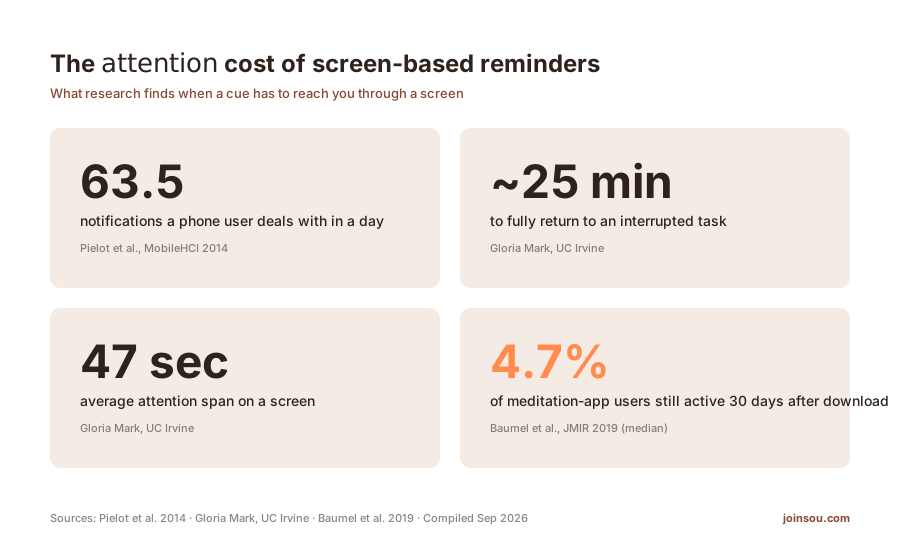
Screen-based tools struggle because they rely on the very device that fragments your attention in the first place. A mindfulness app adds its reminders to a stream already full of alerts, so the prompt to be present arrives alongside everything pulling you away. Attention researcher Gloria Mark at UC Irvine has found it takes about 25 minutes to return to an interrupted task.
Average number of notifications mobile users dealt with per day in a logging study (Pielot et al., MobileHCI 2014).
| What the research measured | Finding | Source |
|---|---|---|
| Notifications a phone user deals with per day | 63.5 on average | Pielot et al., MobileHCI 2014 |
| Time to return to an interrupted task | About 25 minutes | Gloria Mark, UC Irvine |
| Average attention span on a screen | 47 seconds | Gloria Mark, UC Irvine |
| Meditation-app users still active after 30 days | 4.7% (median) | Baumel et al., JMIR 2019 |
There is also a habit problem. Opening an app is a decision, and decisions are easy to skip when you are busy or stressed, which is exactly when a reminder to slow down would help most.
What are the benefits of going screen-free for presence?
The benefits come down to friction removed. A screen-free cue asks nothing of you: no app to open, no screen to unlock, no notification to dismiss. That matters, because most people do not stick with screen-based tools. Studies of meditation apps report high dropout, with many users stopping within weeks (Mindfulness, 2023). The strongest thing you can do to keep a practice going is tie it to something already in your day, rather than a screen you have to remember to open.
A screen-free mindfulness wearable does that by default. The specific benefits:
- No added notifications: the cue is physical and silent, so it does not compete with your other alerts.
- Nothing to track or manage: there is no dashboard to check, no log, and no data to interpret.
- A habit, not a task: a cue you wear is always on, so presence becomes automatic instead of one more to-do.
- Discreet by design: a gentle vibration is private, usable in a meeting or mid-conversation without reaching for a phone.
The cue itself is enough to do the work. A single slow breath is all it takes to interrupt a stress response, the same reset footballers use before a penalty. The wearable simply makes sure the reminder to take it actually arrives.
Why is a wearable with no app the most screen-free option?
Because with no app there is no path back to a screen at all. Many wearables marketed as screen-free still route setup, settings, or firmware through a phone, which means the phone stays part of the experience. A haptic reminder bracelet with no app and no account removes that door entirely: you put it on and it works.
The strictest versions of this go further in the hardware itself. The most screen-free designs contain no wireless components: no Bluetooth, no WiFi, no NFC, so there is no pairing, no syncing, and no radio transmission. The electronics reduce to a small battery and a haptic motor that delivers the cue, and even a fully offline wearable of this kind goes through the same CE and FCC electromagnetic-compliance testing as any other electronic product. In practice that architecture means:
- Nothing to install, update, or troubleshoot, so the experience is identical on day one and day three hundred.
- No account and no data leaving your wrist, because there is no connection for data to leave through.
- Battery life measured in days rather than hours, since there is no radio to power. A no-app wearable of this kind runs 7 or more days per charge and recharges in about an hour.
The trade-off is real and worth naming: no app also means no adjustable settings and no stats. If you want to tune vibration cadence from your phone or see a record of your day, an app-optional wearable serves you better. If the goal is presence with the fewest possible screens, no app wins by definition.
Does removing tracking and data actually help?
Yes, and often more than people expect. The instinct is to measure everything, but constant self-monitoring can create anxiety rather than ease it. Sleep specialists coined the term "orthosomnia" for people whose sleep-tracker data left them more anxious and less rested, not less (Sleep Foundation). The same trap applies to stress and presence: when calm becomes a number, checking the number turns into another source of pressure.
Going screen-free removes the scoreboard. There is nothing to perfect and no streak to protect. You are simply reminded to be here, and what you do with the moment is yours.
What should you look for in a screen-free mindfulness wearable?
If you are comparing options, work down this checklist in order. The things that matter most are the ones that keep it simple:
- No screen and no required app. The moment you have to look at something, it stops being screen-free. Check whether setup or settings still route through a phone.
- A silent, gentle cue. A soft vibration you feel, not a sound or a light that pulls others in.
- What is actually inside. The fewest components fail least. A design without radios has less to break, nothing to pair, and no firmware to manage.
- All-day comfort. You will only benefit from it if you actually keep it on, so it has to be wearable for hours.
- No tracking or data by default. Nothing to log, sync, or interpret.
- Something you would wear anyway. If it looks like a gadget, it lives in a drawer; if it looks like jewelry, it stays on.
How can you stay present without another app?
You do not need a screen to be more present. A few screen-free approaches that work:
- Attach a breath to things you already do: a red light, a doorway, sitting down.
- Keep one meal or one walk a day phone-free.
- Use a physical cue, like a gentle tap or vibration, to interrupt autopilot at intervals.
- Notice one detail in your surroundings you would normally miss.
Start before the stress Take one slow breath before you begin something, opening your inbox or answering a call, rather than after the tension has already built. It is easier to stay calm than to claw it back.
The common thread is that none of these ask you to look at a screen, which matters when the average attention span on a screen has fallen to 47 seconds, according to Gloria Mark's research at UC Irvine. A mindfulness wearable simply makes the physical-cue version automatic, so you do not have to remember to start.
Staying present has never been complicated. The hard part is remembering to do it while a screen competes for every spare second of your attention. Screen-free mindfulness wearables work by taking the reminder off the screen entirely: a small physical cue, no app, no data, no scoreboard. The benefit is not another feature to manage. It is one less thing between you and the moment you are already in.
Sou is one example of this approach, a mindfulness wearable (designed jewelry-first rather than as a gadget) that sends a gentle haptic cue through the day with no app and no screen. Whatever you choose, the principle is the same: the fewer screens between you and the present, the easier it is to actually be here.