

To build a habit that sticks, make it small enough that a bad day cannot stop it, attach it to something you already do every day, and expect it to take longer than you have been told. Research puts the average at about 66 days to become automatic, with a real range of 18 to 254 days. Most habits fail not because of weak willpower but because they are too big, too vague, or attached to nothing that reliably reminds you.
That last point is the one most advice skips, so this piece spends real time on it.

Why start a new habit at all?
Because a habit is the version of a behavior that no longer needs your willpower, and willpower runs out exactly when you need it most.
Start with how much of your life already runs this way. Research by Wendy Wood at USC found that around 43% of daily behavior is performed habitually, in the same context, while the person is thinking about something else (APA). You are not choosing between a deliberate life and an automatic one. Most of the day is already automatic. Building a habit is deciding what gets to live in that 43%.
The second reason is more surprising. It is easy to assume disciplined people are simply better at resisting temptation. Across six studies with 2,274 participants, Galla and Duckworth found close to the opposite: people with high self-control reported less effortful inhibition, not more, and their better outcomes were explained by beneficial habits rather than by resisting urges (Journal of Personality and Social Psychology, 2015). They are not winning the fight. They have set things up so there is no fight.
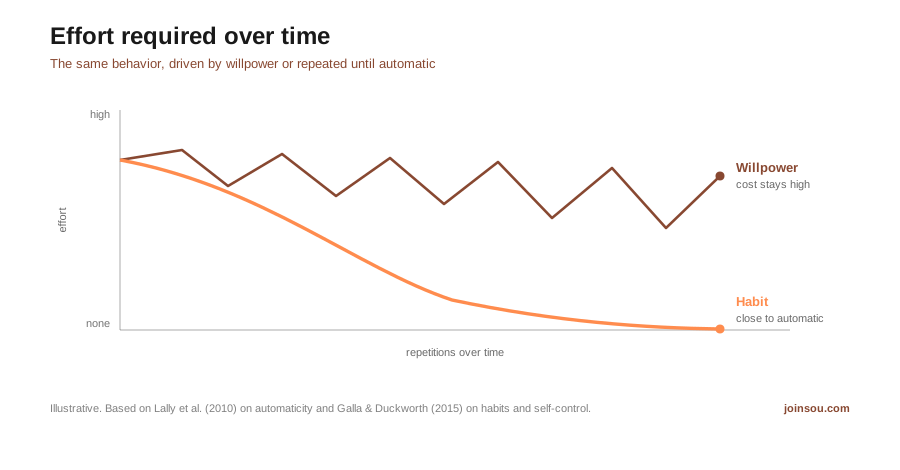
Illustrative concept, not plotted data. A behavior driven by willpower keeps costing roughly the same effort and fluctuates with stress and tiredness. The same behavior, repeated in a stable context, requires steadily less effort until it is close to automatic. Based on Lally et al. (2010) on automaticity and Galla & Duckworth (2015) on habits and self-control.
Share of daily behavior performed habitually, in the same context, while thinking about something else (Wendy Wood, USC, via APA).
The third reason matters most on your worst days. When you are stressed, tired, or mentally depleted, deliberate control weakens and the brain leans harder on whatever is already automatic. A habit is not just convenient when things are calm. It is the only version of a behavior that still runs when you have nothing left to give it.
How long does it really take to build a habit?
About 66 days on average, and anywhere from 18 to 254 days depending on the person and the behavior. The most-quoted figure in habit advice, 21 days, is not a research finding at all.
The 21-day idea traces to Psycho-Cybernetics, a 1960 book by plastic surgeon Maxwell Maltz, who observed that patients took roughly three weeks to get used to seeing a new face in the mirror. That is an observation about adjusting to change, not about forming habits, and Maltz wrote "a minimum of about 21 days." The qualifier fell away as the claim spread.
The actual research comes from Philippa Lally's team at University College London, who tracked 96 people forming daily habits over 12 weeks. Automaticity took a median of 66 days, with individuals ranging from 18 to 254 days (European Journal of Social Psychology, 2010).
The range matters more than the average. If your habit has not gone automatic after two months, nothing is wrong with you. You may simply be further along a distribution that runs to eight months.
Why do most new habits fail?
Because one of three necessary ingredients is missing, and it is rarely the one people reach for.
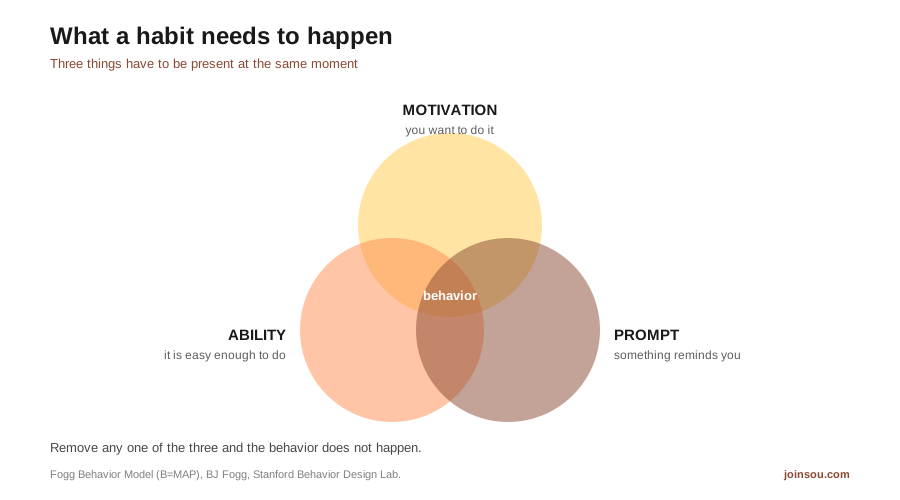
| Ingredient | What it means | What it looks like when missing |
|---|---|---|
| Motivation | You want to do it | You want the outcome, not the activity |
| Ability | It is easy enough to do | The habit is too big for the moment you chose |
| Prompt | Something reminds you | Nothing in your day tells you now is the time |
Source: Fogg Behavior Model (B=MAP), BJ Fogg, Stanford Behavior Design Lab.
BJ Fogg, who runs the Behavior Design Lab at Stanford, describes behavior with the formula B = MAP: a behavior happens when Motivation, Ability, and a Prompt converge at the same moment (Fogg Behavior Model). Remove any one and the behavior does not occur.
This makes a failing habit diagnosable rather than shameful:
- Motivation missing: you do not actually want this, or you want the outcome but not the activity.
- Ability missing: the habit is too big, too slow, or too complicated for the moment you have chosen.
- Prompt missing: nothing in your day reliably tells you that now is the time.
Almost everyone responds to a stalled habit by trying to want it more. Fogg's argument is that motivation is the least reliable of the three, because it rises and falls on its own schedule. Ability and prompts, by contrast, are things you can design.
How do you start a new habit that sticks?
Decide in advance exactly when it happens, make it far smaller than feels worthwhile, and mark it when it is done.
Decide when and where. Vague intention is the weakest form of planning. Specifying the moment in advance, an "if-then" or implementation intention, produces a medium-to-large improvement in goal attainment, d = 0.65 across 94 independent tests and more than 8,000 participants (Gollwitzer and Sheeran, meta-analysis, 2006). "I'll read more" loses to "when I get into bed, I'll read one page."
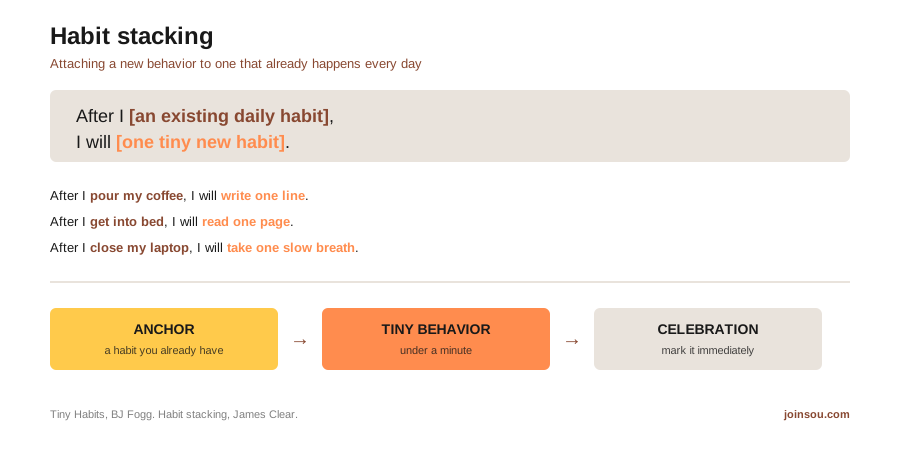
The formula: after I [an existing daily habit], I will [one tiny new habit]. Examples: after I pour my coffee, I will write one line. After I get into bed, I will read one page. After I close my laptop, I will take one slow breath. The three steps are anchor (a habit you already have), tiny behavior (under a minute), and celebration (mark it immediately). Sources: Tiny Habits, BJ Fogg; habit stacking, James Clear.
Make it smaller than feels worthwhile. Fogg's central design claim is that raising ability beats raising motivation, because you control one and not the other. Two push-ups. One page. One slow breath. The size that feels almost embarrassing is usually correct, because it is the size that survives a terrible day. This is the same logic behind micro-moments of practice rather than long sessions.
Mark it. Fogg's Tiny Habits recipe is anchor, then tiny behavior, then celebration, and the celebration is the step almost everyone drops. It can be as small as a nod or saying "good." The point is to attach a positive feeling to the behavior while you are still doing it, rather than waiting for results that arrive months later.
Here is how the best-known frameworks compare:
| Framework | Core idea | Best for | Where it is weak |
|---|---|---|---|
| Tiny Habits (BJ Fogg) | Shrink the behavior, anchor it to an existing routine, celebrate immediately | Getting started when motivation is low or unreliable | Deliberately tiny, so it does not by itself scale you to big outcomes |
| Atomic Habits (James Clear) | Make it obvious, attractive, easy, satisfying; stack habits onto existing ones | A complete practical system, especially environment design | Popular synthesis rather than original research; heavy on examples |
| Implementation intentions (Gollwitzer) | Pre-decide the exact if-then: when X happens, I do Y | The strongest evidence base of the four | A planning tool only; says nothing about keeping it going |
| The habit loop (Charles Duhigg) | Cue, routine, reward, repeated until automatic | Understanding why existing habits, good and bad, persist | More explanatory than instructional; light on how to start |
Pick one, not five Choose a single habit this week, make it small enough to do in under a minute, and attach it to something you already do daily. One habit that becomes automatic is worth more than five you are still negotiating with.
How do you remember to do your new habit?
Attach it to something that already happens every day, and add an external cue only if that anchor is not enough. This is the prompt in Fogg's model, and it is the most commonly missing ingredient.
Anchoring comes first, because a good anchor costs nothing and never needs charging. A strong anchor is:
- Something you already do every single day without deciding to.
- Stable in time and place, so the context does the reminding.
- Immediately before the new behavior, with no gap for life to interrupt.
Brushing your teeth, closing your laptop, putting the kettle on, sitting down in the car. "After I pour my coffee, I write one line in my notebook" works because the coffee is not going anywhere.
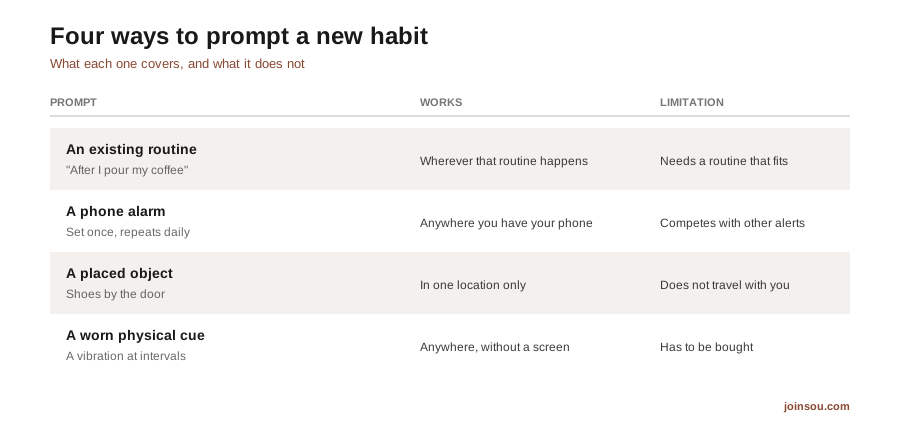
| Prompt | Works | Limitation |
|---|---|---|
| An existing routine | Wherever that routine happens | Needs a routine that fits |
| A phone alarm | Anywhere you have your phone | Competes with other alerts |
| A placed object | In one location only | Does not travel with you |
| A worn physical cue | Anywhere, without a screen | Has to be bought |
External cues are the backup, for habits with no natural anchor or ones that need to happen at intervals rather than at a single moment. Each has a real trade-off:
- Phone alarms and reminders: reliable and free, but they arrive in the same stream as every other alert, which is precisely where they get dismissed without being read.
- Environmental design: putting the running shoes by the door, the book on the pillow. Very effective, but only works in the one place you set it up.
- Written notes: cheap and immediate, though they tend to become invisible within about a week as your eye stops registering them.
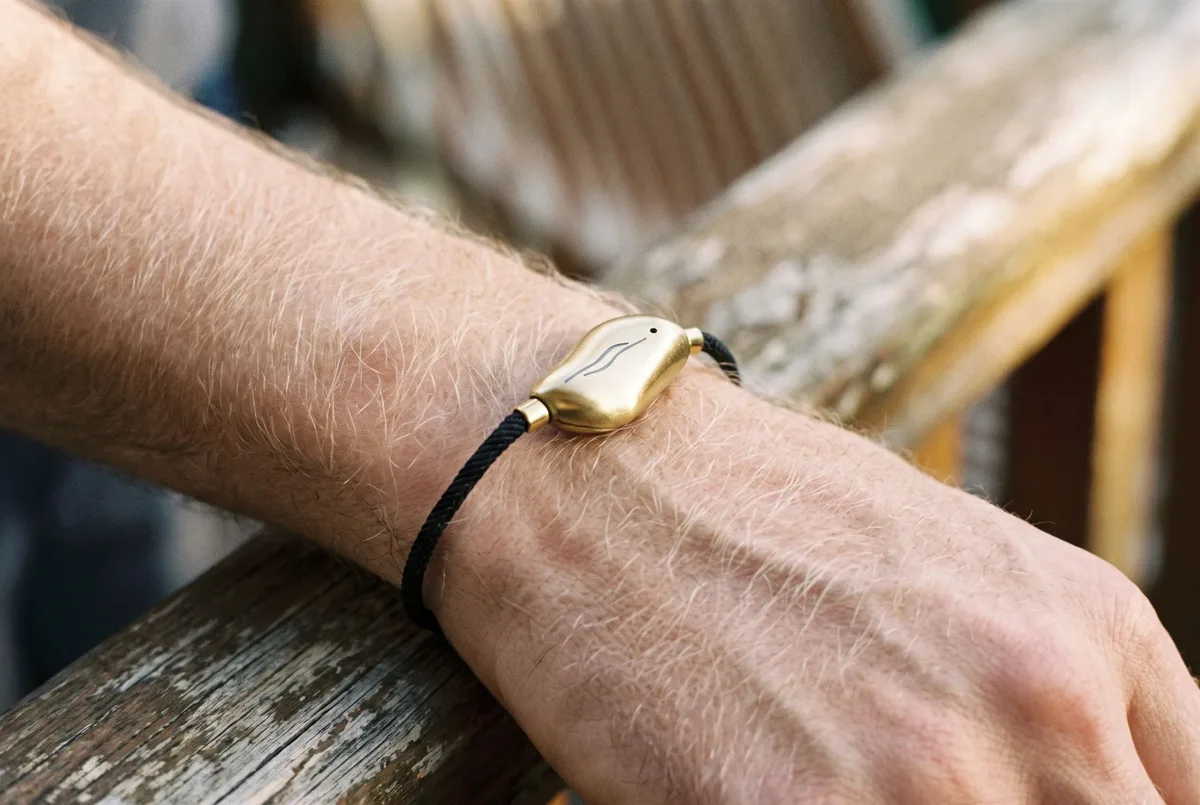
- Physical or haptic cues: a wearable that taps you at intervals delivers the prompt without a screen, which avoids the notification problem entirely, but it costs money and it is a reminder rather than a full solution. We compared the trade-offs of screen-based and physical prompts in more detail in our piece on screen-free reminders.
If a habit keeps failing and you are certain you want it, look here before you look at your motivation.
How do you maintain a new habit?
Keep going, and refuse to treat a missed day as evidence of failure.
A popular rule says never miss twice, on the theory that two misses start a new bad habit. The sentiment is fine but the science is softer than the slogan: in Lally's study, missing a single opportunity to perform the behavior did not materially affect the habit formation process. One missed day costs you almost nothing. What costs you is deciding the streak is ruined and quitting.
That framing matters because the alternative is fragile. If a habit only counts when performed perfectly, then a holiday, an illness, or one genuinely awful week ends it. Habits that survive are the ones allowed to be imperfect.
Two things help through the long middle:
- Expect it to take longer than 66 days. That is a median, not a deadline, and plenty of people in the research sat far past it while still succeeding.
- Make restarting cheap. A one-minute habit is easy to resume after a gap. A forty-minute one requires a decision all over again, which is why small habits recover and ambitious ones quietly do not.
Building a habit is less about discipline than most advice suggests. It is closer to design work: pick something small, attach it to a moment that already exists, make sure something reliably reminds you, and give it longer than you think. Do that and the behavior stops requiring a decision, which was the whole point.
If the missing piece for you is the reminder rather than the will, that is a solvable problem, and worth solving deliberately, whether with an anchor, a note, an alarm, or a physical cue. Sou is one option in that last category, a mindfulness wearable that delivers a gentle vibration through the day with no app and no screen. What matters is not which prompt you use but that you have one at all.